
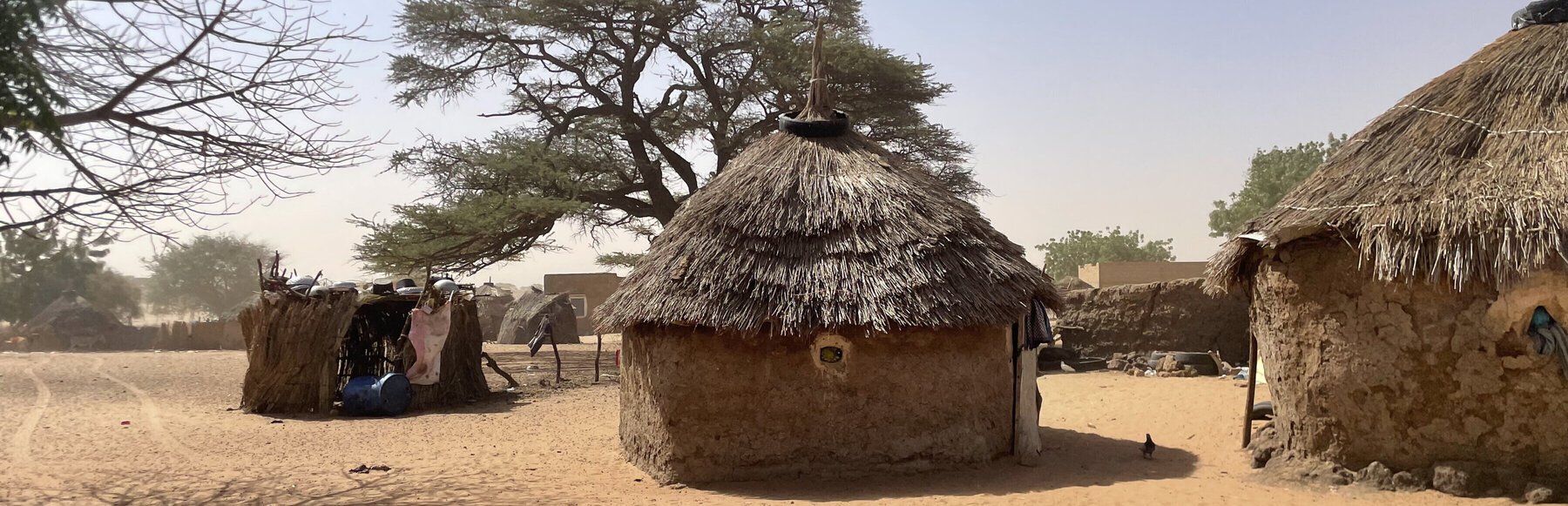
Digital Personas shows how women actually use digital in context, not just in metrics. It combines qualitative insight with population-level data to support more grounded decisions about where digital works, and how it should be designed.
What Are Digital Personas
Digital Personas describe distinct modes of digital engagement, showing how women actually use digital in everyday life, presented in a segmented, multi-dimensional way.
Developed across Kenya, Northern Nigeria, Southern Nigeria, and Senegal, each persona captures how access, capability, and context come together in practice, shaped by constraints, relationships, and lived realities.
They are built by combining qualitative research with systematic mapping to population-level data, allowing these patterns to be examined at scale.
Digital Personas builds on Pathways’ Segmentation, which shows who we are designing for. Personas add a layer of understanding about how digital engagement takes shape within these segments.

Beyond Indicators: Why This Approach Is Needed
Digital access is often described using familiar indicators like phone ownership, internet use, mobile money adoption. These are useful, but they don’t explain how digital is actually used and experienced.
Similar levels of access can hide very different realities of use.
- Smartphone ownership does not guarantee independent or text-based use. For women with limited literacy, access may be mediated or constrained. In Rural Northern Nigeria, 41% of women who own smartphones are not able to read full sentences.
- Similar levels of access can sit alongside very different levels of agency. A woman who uses the internet may still be unable to recharge or repair her device independently. In Urban Northern Nigeria, among women who own smartphones, 52% report high participation in household decision-making, while 40% report low to medium participation.
- Women’s access to digital is often unstable and disrupted. The ability to recover is shaped by financial resources. Limited means can result in longer breaks in use. In Rural Kenya, among women who own smartphones, 25% fall below the median wealth quintile.
- Internet use spans very different educational backgrounds, suggesting differing capacities to navigate, interpret, and benefit from digital content. In Urban Senegal, among women who report using the internet, 34% have no formal education and 39% are not able to read at all.
These patterns show that familiar indicators alone is not enough to understand digital use. They point to the need to examine the conditions that shape how digital is accessed, shared, controlled, and sustained.
Digital Personas brings these indicators together with social, economic, and relational factors, organising them into five interconnected dimensions. Each dimension is built through a combination of observable indicators (e.g., education, device access, media exposure) and qualitative insights that surface how these indicators are lived, negotiated, and sometimes resisted.
| Relevance: How and why digital matters |
| Skills: Women’s digital capabilities, and how these are learned, practiced, or constrained |
| Safety: Awareness of digital risks, and strategies for navigating them |
| Affordability: Access to devices, airtime, data, and repair, and how financial constraints shape use |
| Norms: Permissions, expectations, scrutiny, and social consequences that shape women’s digital use |
What You Can Do with Digital Personas
Digital Personas can be used across the lifecycle of digital design and implementation, helping teams make more grounded and differentiated decisions.
| Designing the Right Interventions: Assess where digital solutions are likely to work, and where non-digital or hybrid approaches are more appropriate. |
| Shaping Experience and Features: Align product features and UI/UX with how people actually use digital, including language, format (text, voice, assisted), and how trust and safety are handled. |
| Targeting and Delivery: Design appropriate engagement strategies, including onboarding and ongoing support based on differences in access (personal vs shared devices), and capability (independent vs assisted use). |
| Stress-Testing and Iteration: Identify who may be left out, where designs break down, and what needs to change before scaling. |

Partners
Digital Personas is developed by Quicksand | Stby with support from the Gates Foundation. Tracy Johnson, Caryl Feldacker, and Zachary Kazzaz provided ongoing guidance and thought partnership.
YUX Design led data collection across all geographies and collaborated with Quicksand on qualitative analysis.
Decodis conducted a large-sample IVRS-based study in parallel, contributing data and participating in joint sense-making sessions with Quicksand, the Gates Foundation, and YUX.
Digital Personas builds on Pathways’ Segmentation, led by Sonder Collective.
Nitin Garg designed the website and worked with the Quicksand team to develop the visual design system.
The website was developed by Miranj.