

- Age
- 23 Years
- Location
- Diourbel
- Marital Status
- Married
- Education
- Complete Secondary
- Pathways Segment
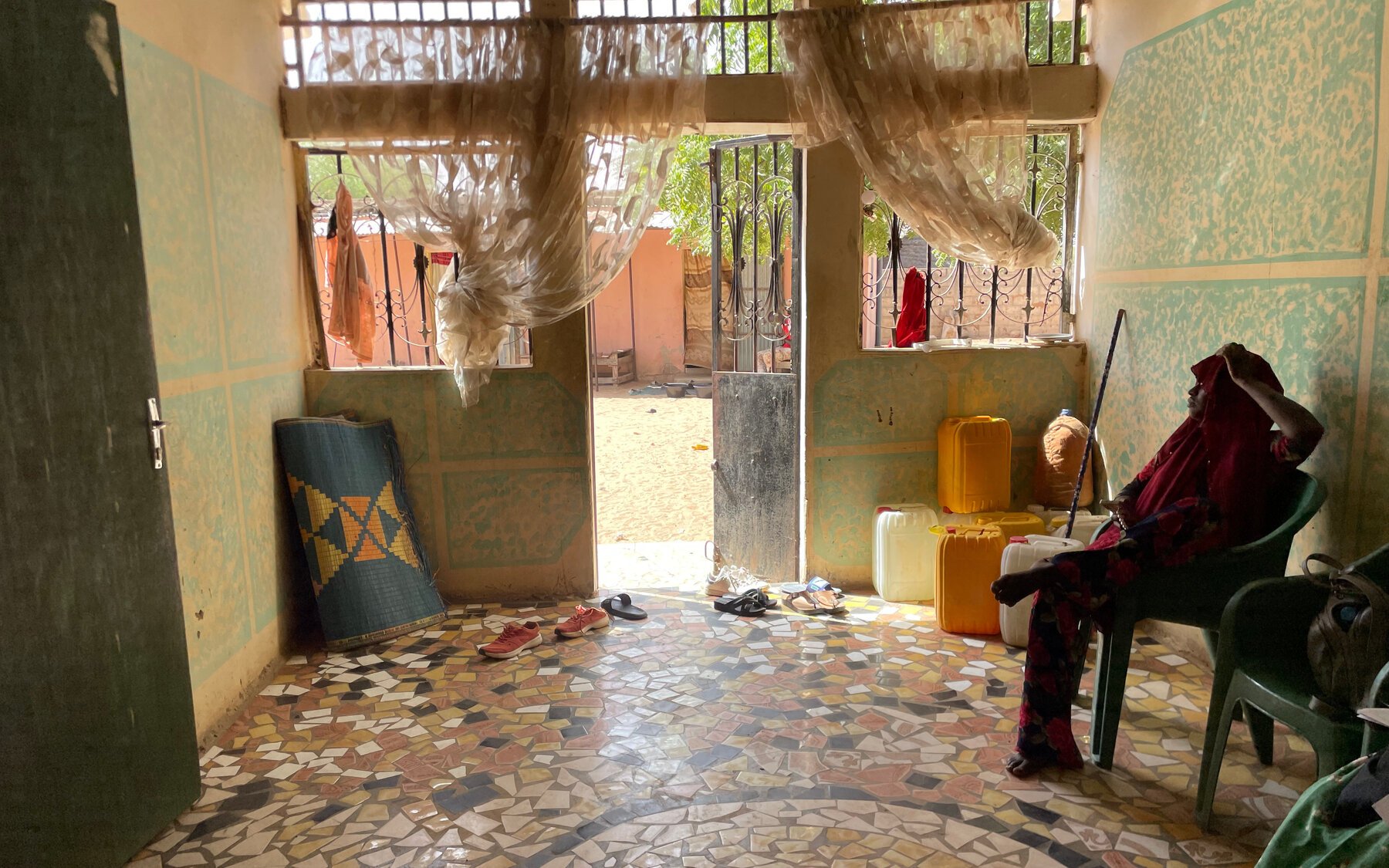
A woman in rural Diourbel navigating shared household life and cautious digital use

In Senegal, the risk that private moments can accidentally become public makes digital use high-stakes for many women. Even a single unintended share can have serious social consequences. Designing for safety, reversibility, and clear boundaries is critical to enabling confident use.
How She Uses the Phone
Aissatou grew up in a large household run by her grandfather and uncles, where she lived with her mother and five siblings. Her father worked in France and visited rarely, though he sent money and gifts when he could. During one visit, he brought a basic phone for the family. The phone was kept carefully by her mother and treated as a shared household object. Children were allowed limited access, mostly to answer calls, play simple games, or listen to music. This was Aissatou’s first exposure to phones. She remembers learning small things by watching others. Her older brother showed her how to use the calculator, which she began using for schoolwork. “I didn’t think of it as my phone,” she says. “It was for the house.” Still, the device felt familiar rather than frightening.
After her marriage, Aissatou received her first personal phone, a feature phone given to her by her husband. She was his second wife and lived in a large household with her co-wife, sisters-in-law, and many children. The phone could take photos and store media on an SD card. Sometimes her husband would bring home movies for her to watch, and over time she learned how to receive files via Bluetooth.

Because phones were shared frequently within the household, she became used to handing the device back and forth, learning bits and pieces from those around her.
Two years ago, her father sent her a smartphone from France. She was excited. With help from her nieces and nephews, she learned the basics quickly – how to open apps, make calls, and use WhatsApp. The person who helped her the most was her stepson, who was already confident with smartphones. Since she had used feature phones for years, the transition felt manageable. She began using WhatsApp and Snapchat, mostly alongside younger members of the household. Data was often shared or bought by different people, so connectivity was rarely just her responsibility.


Then one day, while her children were playing games on her phone, one of them accidentally posted a photo of her on Snapchat. It was not explicit or harmful, but it showed her in a way she would not choose to share publicly. The photo was visible to people outside the family. The incident caused a serious conflict at home.

Her husband was very angry and took her phone away. For a period, phone use by other women in the household was also restricted. “It was like everything became dangerous,” she says. Eventually, her husband relented and returned the phone, but the experience stayed with her. “That day taught me that one mistake is enough,” she explains. “You can show something you didn’t mean to.”
Since then, Aissatou has been much more careful. She uses her phone, but within clear limits she understands and can control. She avoids posting photos of herself and does not participate openly in group discussions. This caution shapes how she engages digitally, especially in social spaces. One such space is a women’s WhatsApp group she belongs to, where topics range from marriage and childcare to women’s health. Aissatou values the information shared there, but she rarely speaks. “I prefer to read,” she says. “If I ask something, people will know it’s me.” When she has a question, she sends it privately to the group admin, a Bajenu Gox (community health worker) whose role and standing in the community she deeply respects. The admin then shares the advice with the group without naming who asked. This allows Aissatou to access trusted information while protecting her privacy.
Her Ecosystem of Learning and Facilitation
Much of Aissatou’s learning has happened through others. When she first received the smartphone, it was her stepson who helped her most. He created accounts for her, explained which apps were safe to use, and showed her how to open and close them properly. “He would say, ‘This one is for messages, this one you don’t touch,’” she recalls.
After the Snapchat incident, her husband also became involved. He showed her how to lock the phone with a code and how to place additional locks on specific apps. He explained why each step mattered and insisted that some apps should remain restricted. Since then, Aissatou has felt more comfortable letting her children use the phone but only under clear rules. Younger children can play games, but the phone must be locked. Older children are limited to certain apps and must ask before accessing others. “I feel safer when it is locked,” she says.