

- Age
- 35 Years
- Location
- Louga
- Marital Status
- Married
- Education
- No Education
- Pathways Segment
A home-based hair braider using a basic phone to stay reachable and receive payments
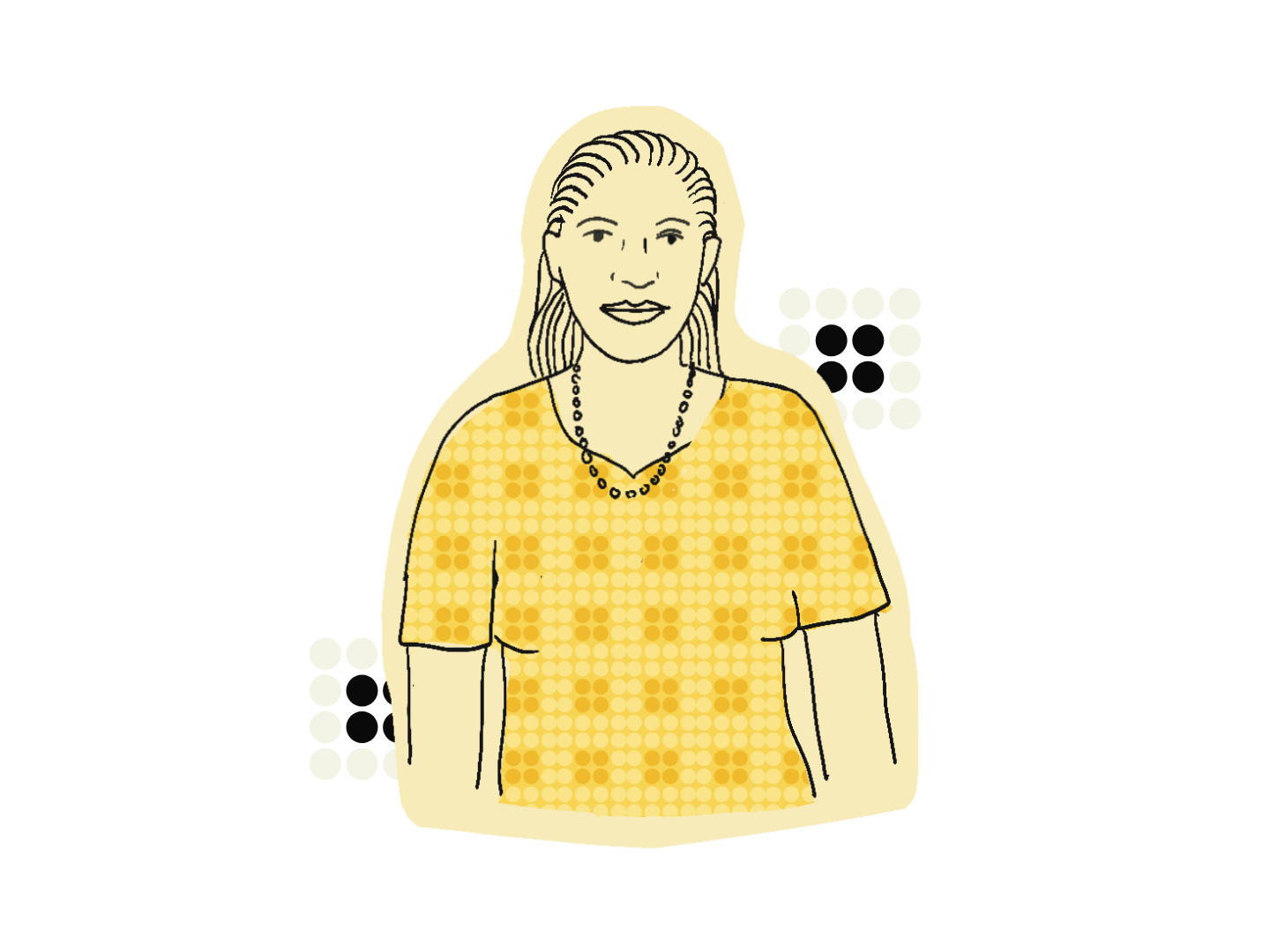
For some women, digital value does not depend on full competence or independent use. Being reachable and receiving payments, often with help from trusted intermediaries, can be sufficient. This suggests a need to design for low-intensity, assisted use, rather than assuming users will or should move toward full autonomy.
How She Uses the Phone
Aminata is 35 and lives in an urban neighbourhood in Senegal. She is married with four children and earns income intermittently as a hair braider, working from home or travelling short distances to braid for clients. Her phone is a basic handset, second-hand and well-used, but it has become essential to how she stays connected to work and family.
Aminata did not grow up using phones and only began using one after marriage, when her husband started travelling for work. The phone was meant primarily so he could reach her, but over time it became important for her own livelihood. Clients now call her directly to ask about availability or book appointments.

“People call me when they want to braid,” she explains. “That is how I know when I will work.”
The income she earns from braiding is modest, but it matters. It allows her to cover small personal needs without asking her husband for money each time. “Even if it is not much,” she says, “it is good for a woman to have something of her own.” Being reachable by phone has made this possible; without it, she knows clients would simply move on to someone else.

Her phone is old and unreliable. The battery drains quickly, and she often has to recharge it multiple times a day, “I charge it, and it drains straight away; I’m recharging it all the time”, she explains. When the phone is off or unavailable, she worries about missing calls.
Her Ecosystem of Learning and Facilitation
Aminata’s learning around digital tools has happened slowly and almost entirely through intermediaries. When relatives in Mali wanted to send her money during a difficult period, she was helped to receive it through Wave. She did not set this up herself.

A local Wave agent handled the process, explaining what he was doing as he went. Aminata watched and listened, but did not attempt to memorise the steps.
Today, when she receives payments for braiding through Wave, she usually goes to a nearby shopkeeper to complete the transaction and withdraw cash. She trusts him and values the relationship. “He helps me do it,” she says. “I don’t want to make a mistake.” She does not try to navigate the system alone, but she feels reassured knowing the money arrives on her phone and is handled in her presence.
Although her use of digital financial tools remains dependent on others, the shift has changed how she experiences money. With payments coming directly to her number, she experiences a greater sense of discretion and control than before. “I am the one who receives it,” she explains. “I know how much I earn.” For Aminata, this sense of ownership matters more than technical mastery.
Her learning is pragmatic and bounded. She does not experiment, explore new features, or try to expand her use beyond what feels necessary. Instead, she relies on trusted people such as agents, shopkeepers, and family members to help her complete tasks when needed. The phone, for her, is not about becoming more digital; it is about staying reachable, earning when she can, and maintaining a small but meaningful sense of independence.
