

- Age
- 40 Years
- Location
- Kano
- Marital Status
- Married
- Education
- No Education
- Pathways Segment
An older woman in urban Kano who rejects phone use to uphold household norms and values
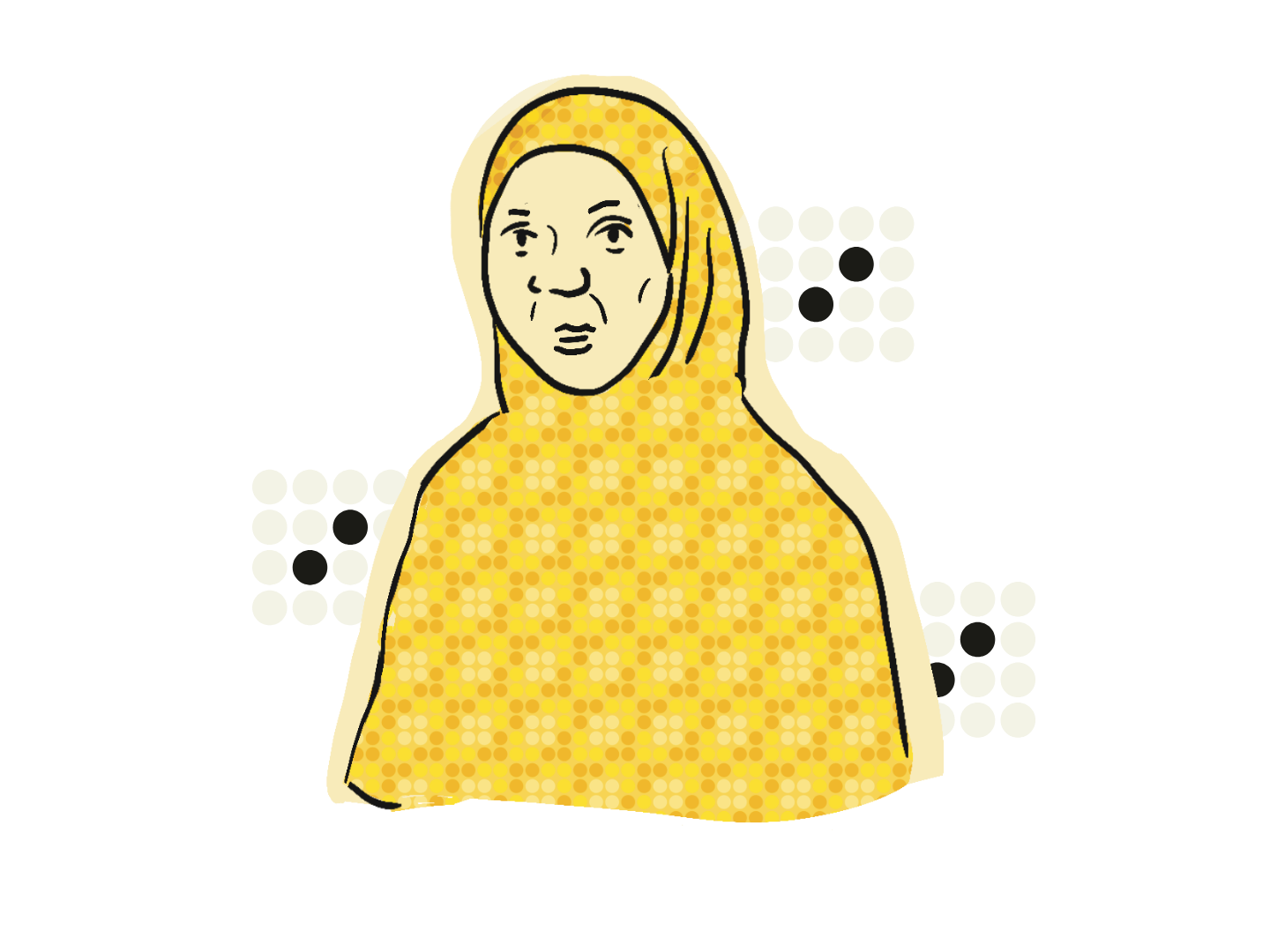
Some women actively reject phone use because they see it as incompatible with moral responsibility and household authority. These internalised norms can lead women to limit not only their own digital use, but also shape what is considered acceptable for other women in the household.
How She Uses the Phone
Khadija is 40 and lives in an urban neighbourhood in Kano with her husband, her younger co-wife, and their children. As the senior wife in the household, she sees herself as responsible for maintaining order, respect, and proper conduct within the family. Khadija does not own a phone and does not consider personal phone use appropriate for married women in her position.
She believes phones – especially smartphones – introduce moral risk into the household. “Too many bad things come from it,” she says. In her view, phones expose women to content and interactions that can distract them from their responsibilities and disrupt family life. Entertainment, in particular, feels dangerous to her.

When her younger co-wife watches Hausa films on her phone, Khadija openly disapproves. “Those films change people,” she says. “They make women forget how to behave.”
Because of this, Khadija does not borrow phones for entertainment, information, or casual communication. She prefers face-to-face interaction and relies on household routines, neighbours, and community networks to stay informed. Distance from digital technology is not something she experiences as loss. It is something she actively maintains.
Khadija is aware that many women around her use phones, but this does not change her stance. “Not everything new is good,” she explains. Her resistance is not about difficulty or lack of skill, it is a conscious choice shaped by values and her role within the household.
Her Ecosystem of Learning and Facilitation
Khadija only engages with phones during clear emergencies. If there is a serious situation such as illness, travel complications, or urgent family matters, she asks someone nearby to help her make or receive a call.

Even then, she does not handle the phone herself. “It is only for urgent matters,” she says. “After that, I leave it.”
She has not learned how to dial numbers, read messages, or navigate phone menus, and she does not wish to. Knowing how to use a phone would, in her view, invite unnecessary temptation and attention. By keeping her distance, she preserves what she sees as proper boundaries for herself and for the household.
