

- Age
- 30 Years
- Location
- Diourbel
- Marital Status
- Married
- Education
- No Education
- Pathways Segment
A woman building her cooking skills through limited and irregular smartphone access

When access to digital tools is intermittent and externally controlled, learning becomes fragile. Motivation alone is not enough without regular, low-friction access. Design must therefore assume disruption, supporting learning that can pause, resume, and survive gaps rather than depend on continuity.
How She Uses the Phone
Mariama’s access to a smartphone is closely tied to her husband. He bought her her first smartphone when they married, and two years later she still uses the same device. She would like a newer phone, but she knows that both the decision itself and its timing are not hers alone. The same is true for data. When her data runs out, she cannot top it up independently and must wait until her husband does it for her, resulting in intermittent access.

These constraints matter to Mariama. She cooks regularly for her husband and extended family and enjoys trying new dishes. Over time, she has begun to imagine turning this into something more: preparing meals from home for young working people in her area. “I like cooking a lot,” she says. “When I try cooking something new, people enjoy it.” To learn, Mariama turns to YouTube, watching recipe videos whenever she has data. Visual content works best for her because she can follow ingredients and steps without reading.

“When I see it, I understand,” she explains. She often replays the same video several times, pausing to memorise steps before trying them herself.
But her access is fragile. Last month, her husband recharged her phone and she used the data within a few days watching cooking videos. After that, she stayed offline for almost two weeks. She did not ask for another recharge. “I felt shy,” she says. “If I ask again, he will say I am wasting data.” Mariama has suggested getting Wi-Fi at home so she could watch videos without worrying about data, but her husband dismissed the idea, saying it was unnecessary. For now, she adjusts her ambitions to fit what access allows.
Reading and writing on the phone remain difficult for her. When messages arrive, she often asks her co-wife to read them aloud and help her reply. Although she would like to manage messages on her own, text-based use continues to depend on others, reinforcing her sense that there are limits to how far she can go on the phone by herself.
Her Ecosystem of Learning and Facilitation
Mariama learned most of what she knows about her phone through her husband. He showed her how to search for videos, how to open YouTube, and how to play and replay clips. Before marriage, she had some basic familiarity with phones, but it was after marriage that she began using a smartphone regularly.
His teaching, however, always comes with warnings.
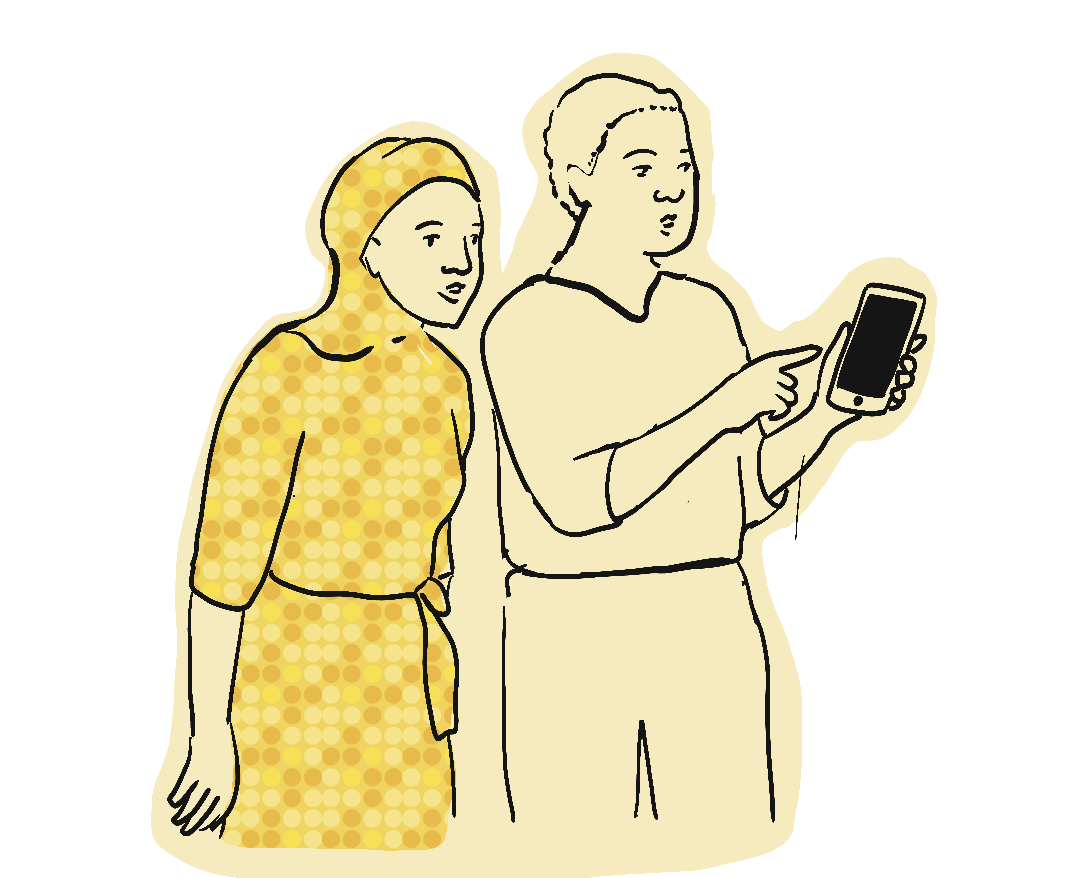
He reminds her that platforms like Facebook and TikTok can be dangerous for women, exposing them to strangers or gossip.
He has not created accounts for her on these platforms and advises her to stay focused on “useful things,” like cooking videos or WhatsApp chats with family. Mariama follows these boundaries closely. “I don’t want trouble,” she says. “I only use what he shows me.”
When she wants to download more videos without using data, she visits her sister, whose household has Wi-Fi. Her sister’s husband helps download cooking videos onto her phone so she can watch them later at home. They have tried to show her how to do this herself, but Mariama usually asks them to handle it. “I’m not used to going deep into the phone,” she explains. “I stay on the surface.”

Rather than experimenting independently, Mariama prefers to hand the phone to someone she trusts when something feels unfamiliar. She is curious and eager to learn, but her learning remains shaped by dependence — on her husband for access, on relatives for downloads, and on clear boundaries that keep her usage focused and contained.