

- Age
- 25 Years
- Location
- Louga
- Marital Status
- Married
- Education
- Incomplete Higher
- Pathways Segment
A young mother in rural Louga managing her household while pursuing her education through her phone

For women with digital capability and family support, phones can function as bridges back into formal education, making it possible to resume certified learning even when marriage, childcare, and home responsibilities would otherwise make it inaccessible.
How She Uses the Phone
Ndeye grew up sharing a smartphone with her older sister, learning early by watching – how to make calls, navigate menus, and watch videos. Using a phone has never felt intimidating to her; it has always been part of everyday life.
Ndeye is now 25 and married with two young children. Her husband travels often for work, which means Ndeye manages many day-to-day responsibilities on her own, including household tasks, childcare, and payments. While some relatives live nearby and she does not feel socially isolated, much of the practical management of daily life falls to her. She uses her phone to handle these responsibilities independently, sending and receiving money through mobile money, paying for electricity through Woyofal, and keeping track of household expenses. These tools allow her to manage the home smoothly, especially when her husband is away.

Ndeye got married at 20 and had her first child soon after, followed by a second a year later. For the past four to five years, she has been primarily focused on caring for her children and managing the household. During this time, she paused her studies and became a full-time homemaker. Still, the desire to return to her education never left her. Her husband always said he supported this, while also reminding her that their children must come first.
About six months ago, a friend told her about a distance learning programme that could be completed almost entirely on a phone.
The course was affordable, largely video-based, and offered a recognised diploma. “When she told me I could study from my phone,” Ndeye says, “I felt like this is my chance.”
After discussing it with her husband, she decided to enroll. Because the learning could happen from home, he was comfortable supporting her. Since Ndeye does not currently earn an income, he agreed to contribute to a shared Wi-Fi connection with neighbouring households so she could attend classes without relying on mobile data. This made regular participation possible.
Most of the course coordination happens through WhatsApp. Tutors share lesson schedules, send audio explanations, and respond to questions in group chats. Course videos and materials are accessed through links sent to her phone. Ndeye plans her days around these sessions, watching lessons when her children are asleep or occupied. “I don’t like carrying papers everywhere,” she says. “My phone is enough.”
Her Ecosystem of Learning and Facilitation
Enrolling in the course was not immediately straightforward. When Ndeye first tried to sign up, she struggled with the online registration process including creating an account, uploading documents, and accessing the learning platform. Some steps were unfamiliar, and error messages confused her.
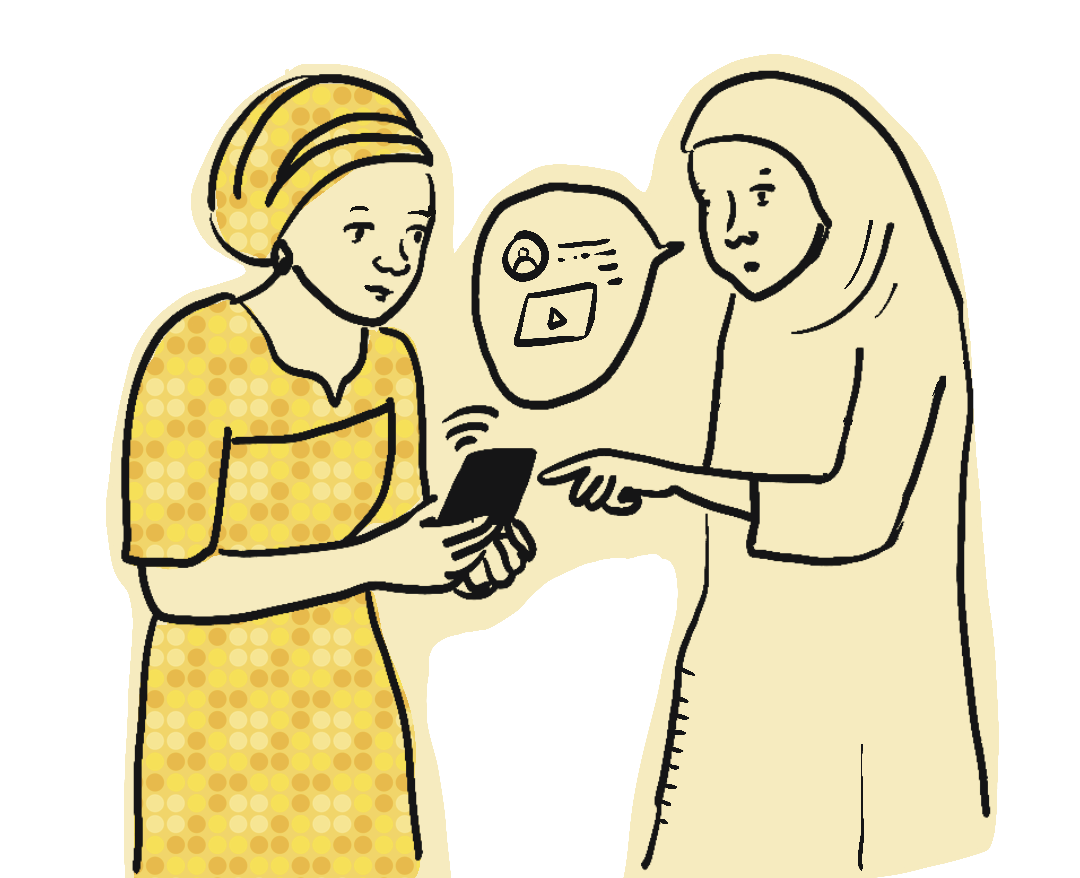
She reached out to the friend who had told her about the programme. Sitting together, her friend walked her through the process step by step – how to register, where to find course videos, how to download materials, and how to follow announcements shared through WhatsApp.
Once the initial setup was complete, Ndeye felt confident navigating the system on her own.
Since then, she manages her learning independently. She downloads videos when the Wi-Fi connection is strong, listens to audio explanations repeatedly if something is unclear, and keeps track of deadlines through messages shared in the group. When something new comes up, she tries to figure it out herself first, asking for help only when needed.

For Ndeye, returning to study is not about curiosity alone. It is a deliberate effort to rebuild a part of her life that was paused, using the phone as a tool that fits within her responsibilities as a mother and wife.