

- Age
- 19 Years
- Location
- Kano
- Marital Status
- Married
- Education
- No Education
- Pathways Segment
A young mother, in the outskirts of Kano with no independent access to digital devices

For women like Rukkayat, digital disconnection is not an exception but the norm. She cannot be reliably reached or engaged as an individual user. Solutions that assume personal phone access are unlikely to work unless they engage family intermediaries rather than the woman alone.
How She Uses the Phone
Rukkayat is 19 and lives near Kano with her husband, her mother-in-law, her widowed sister-in-law, and her young daughter. She spends most of her time at home, managing household tasks and caring for her child. Rukkayat has never owned a phone of her own.
Her access to phones is entirely mediated by her sister-in-law. When someone calls for her, her sister-in-law answers the phone and then hands it to Rukkayat to speak. Once the call ends, the phone is taken back.

“She gives it to me when someone is calling me,” Rukkayat says. “After that, I return it.”
Rukkayat does not dial numbers, read messages, or handle any other phone functions. She does not keep the phone with her or explore it independently. “I don’t know how to press anything,” she explains. “I just talk and give it back.” Because of this, her phone use is limited strictly to receiving calls.

When neighbours need her for small laundry work, they usually come to the house rather than calling. Outside of occasional calls, Rukkayat has very little interaction with digital media. Sometimes, she listens to the radio when her sister-in-law or husband turns it on, usually for religious sermons or community announcements. She does not choose what is played or when.
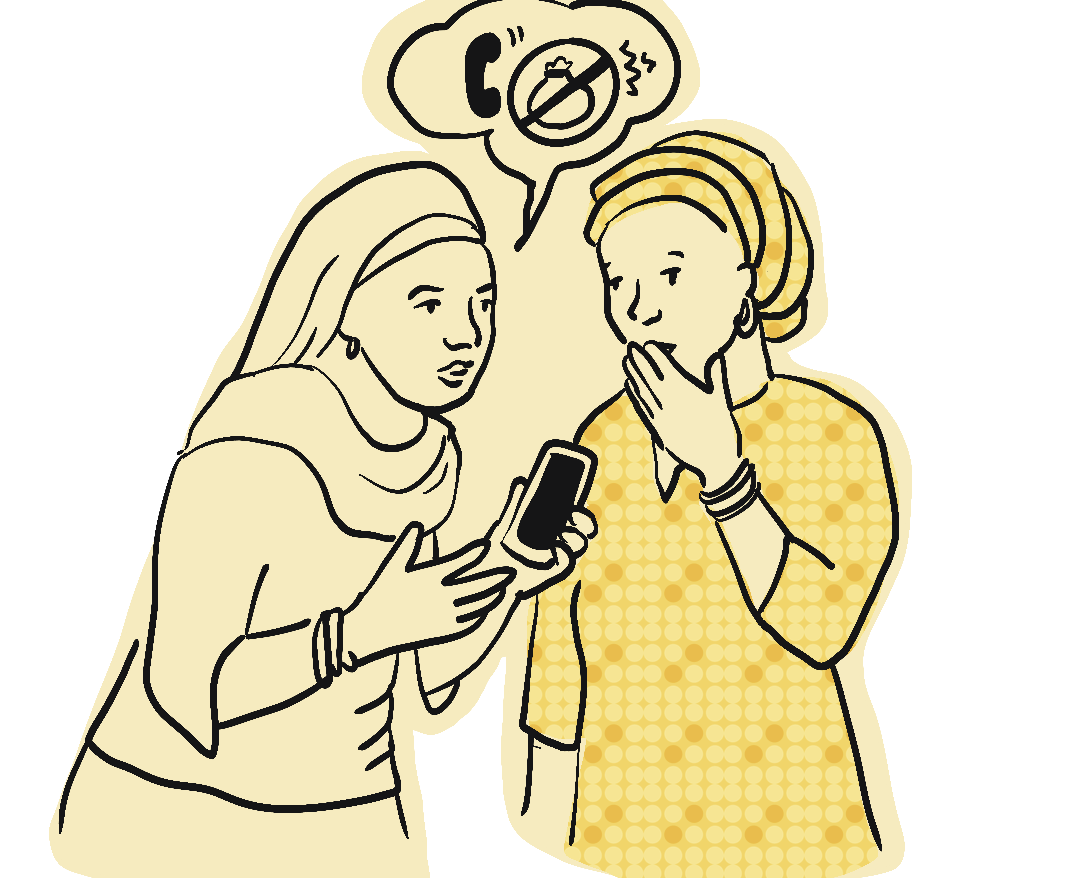
Rukkayat hears stories from neighbours about people losing money through phone scams or receiving strange calls. But she does not feel exposed to these risks herself.
“I don’t use the phone myself,” she says. “They handle it.” Because she does not operate the device or make decisions about its use, digital safety does not feel like something she needs to manage.