

- Age
- 30 Years
- Location
- Lagos
- Marital Status
- Separated
- Education
- Complete Secondary
- Pathways Segment
A street food vendor using a basic phone while saving toward a smartphone to grow her business
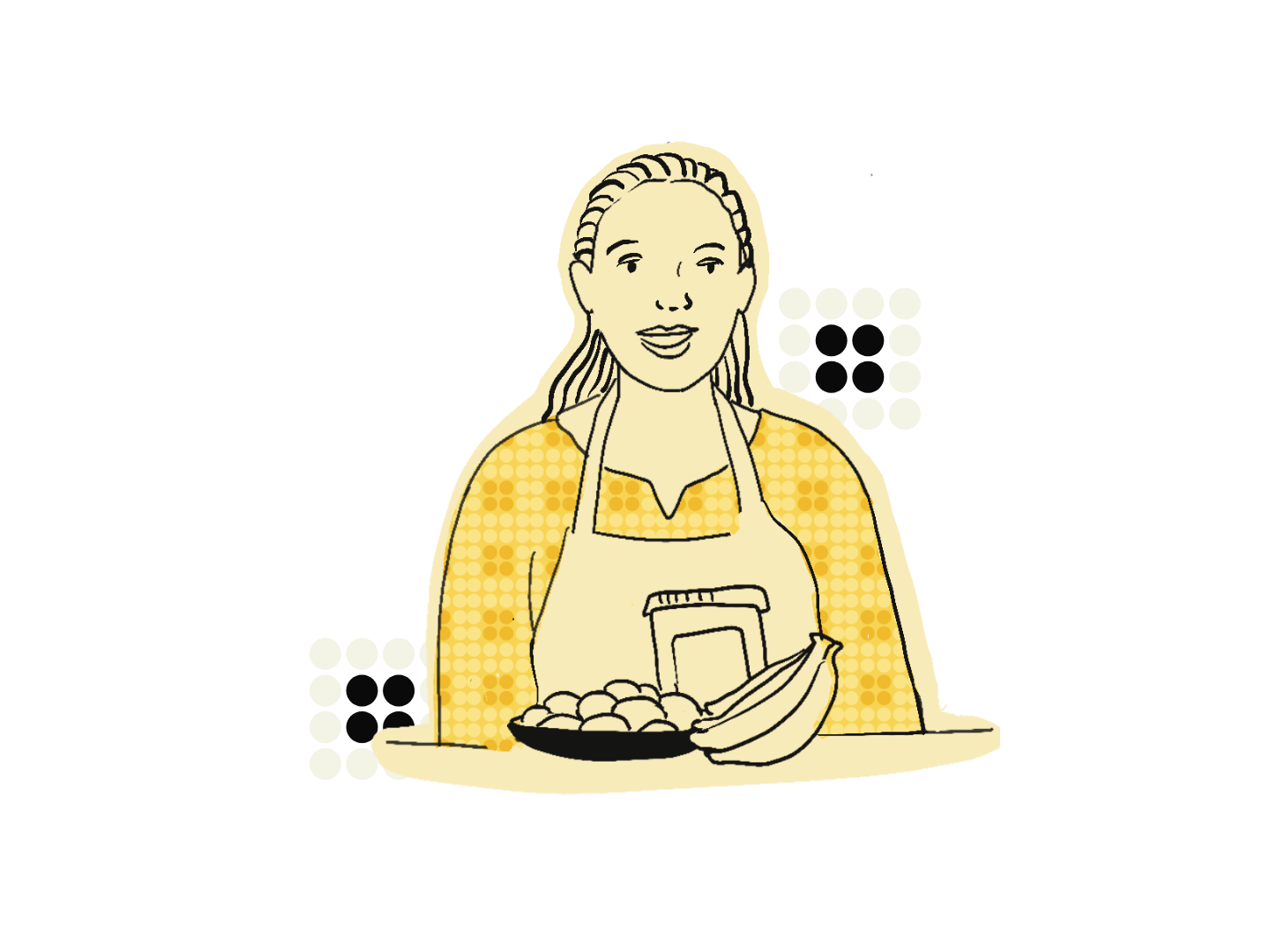
For women trying to grow small businesses, access to a smartphone becomes a key barrier. When affordability is a constraint, progression stalls despite clear motivation, pointing to the need for low-cost, incremental pathways into more capable digital use.
How She Uses the Phone
Hope is 30 and lives in Lagos with her two children. She is separated from her husband and manages the household on her own. She earns a living selling snacks such as fried plantains, puff-puff, and small fried items from a mobile cart, setting up in a few regular locations depending on the day. Hope owns a basic feature phone, which she uses mainly for calls. Customers call her to ask where she is or to check if she has food available.

“If they don’t call, they won’t find me,” she says. Much of her business depends on regular customers who already know her and return often.

Recently, some customers have started asking to pay through bank transfer. To keep their business, Hope learned how to receive money using USSD. When a customer sends money, she checks her balance using short codes and later withdraws the cash from a POS agent near her home.

“He showed me how to check it,” she says. “If I don’t understand, I go to him.” She does not use digital payments beyond this and prefers to deal in cash whenever possible.
Hope is keenly aware of what her phone cannot do. She sees other vendors using smartphones to share pictures, promote their food, and communicate more easily with customers. Recently, a neighbour who also runs a small business bought a smartphone. The neighbour told her she is learning new things on it – recipes, ways to attract customers, even how to access small loans. “She is doing many things now,” Hope says. “With the phone, she is moving forward.”
Hope wants the same. She has been trying to save money to buy a smartphone, putting aside small amounts whenever she can. But it has been difficult. Her earnings go quickly toward food, rent, and her children’s needs. She has considered borrowing money but decided against it. “I already owe people,” she says. “I don’t want another debt.”
For now, she continues with what she has. But unlike before, she now sees her phone not just as a tool for staying reachable, but as something that could change how she runs her business. The gap between what she can do and what she could do feels more visible.
Her Ecosystem of Learning and Facilitation
Hope’s learning has been driven by necessity rather than exploration. When customers began asking to pay through bank transfer, she had no choice but to figure out how to receive money that way. A nearby POS agent became her main source of support. He showed her how to dial the correct codes, check her balance, and confirm when money had arrived.
She learned these steps through repetition. “At first I didn’t understand,” she says. “But when I kept doing it, I got used to it.” Even now, she does not try to go beyond what she has learned. If something is unfamiliar, she prefers to ask for help rather than risk making a mistake.
Her exposure to smartphones is indirect. She sometimes watches her neighbour use her phone – scrolling, opening apps, watching videos – but she does not try to use it herself. It feels like “too many things at once.” Instead, she observes and imagines what she might do if she had her own.
For Hope, learning is shaped as much by financial reality as by curiosity. She is willing to learn, but only within what her current situation allows. The idea of doing more with a phone is clear to her, but reaching that point depends first on being able to afford it.
